


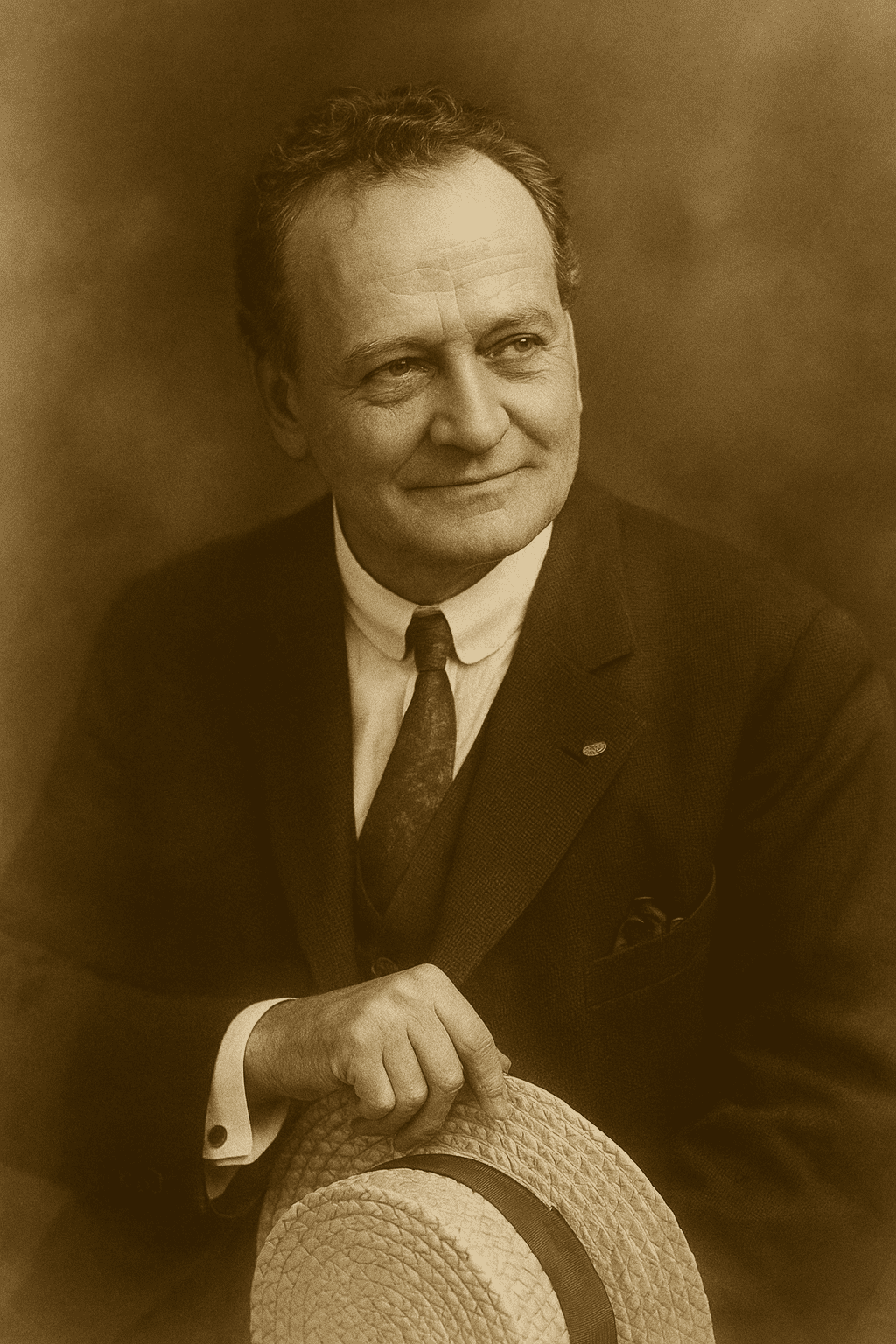
Edwin Barbour grew up in Cresco long before Hollywood existed, yet he carved out a place for himself in the earliest chapters of American entertainment. Born on July 2, 1857, he carried small‑town Iowa grit into the bustling worlds of Broadway and silent film, becoming both an actor and a writer at a time when the industry was still inventing itself.
Barbour first made his mark on the stage. His original drama Northern Lights debuted on Broadway in 1895, a rare achievement for a Midwestern playwright of his era. He later returned to the Great White Way as an actor in A Fool There Was (1909), where he played the Ship’s Captain with the steady presence of a seasoned performer.
As motion pictures emerged, Barbour stepped into the new medium with the same creative curiosity. He wrote several silent‑era screenplays, including the 1914 film version of Northern Lights, and appeared on screen in productions such as The Fortune Hunter and The House Next Door. His work spanned genres—from whimsical shorts to dramatic features—reflecting a storyteller eager to explore every corner of the craft.
Barbour died in 1914 in Philadelphia but stands as one of Howard County, Iowa’s earliest artistic exports: a hometown writer‑actor who helped shape the transition from stage to screen, leaving behind a quiet but meaningful imprint on American performing arts.